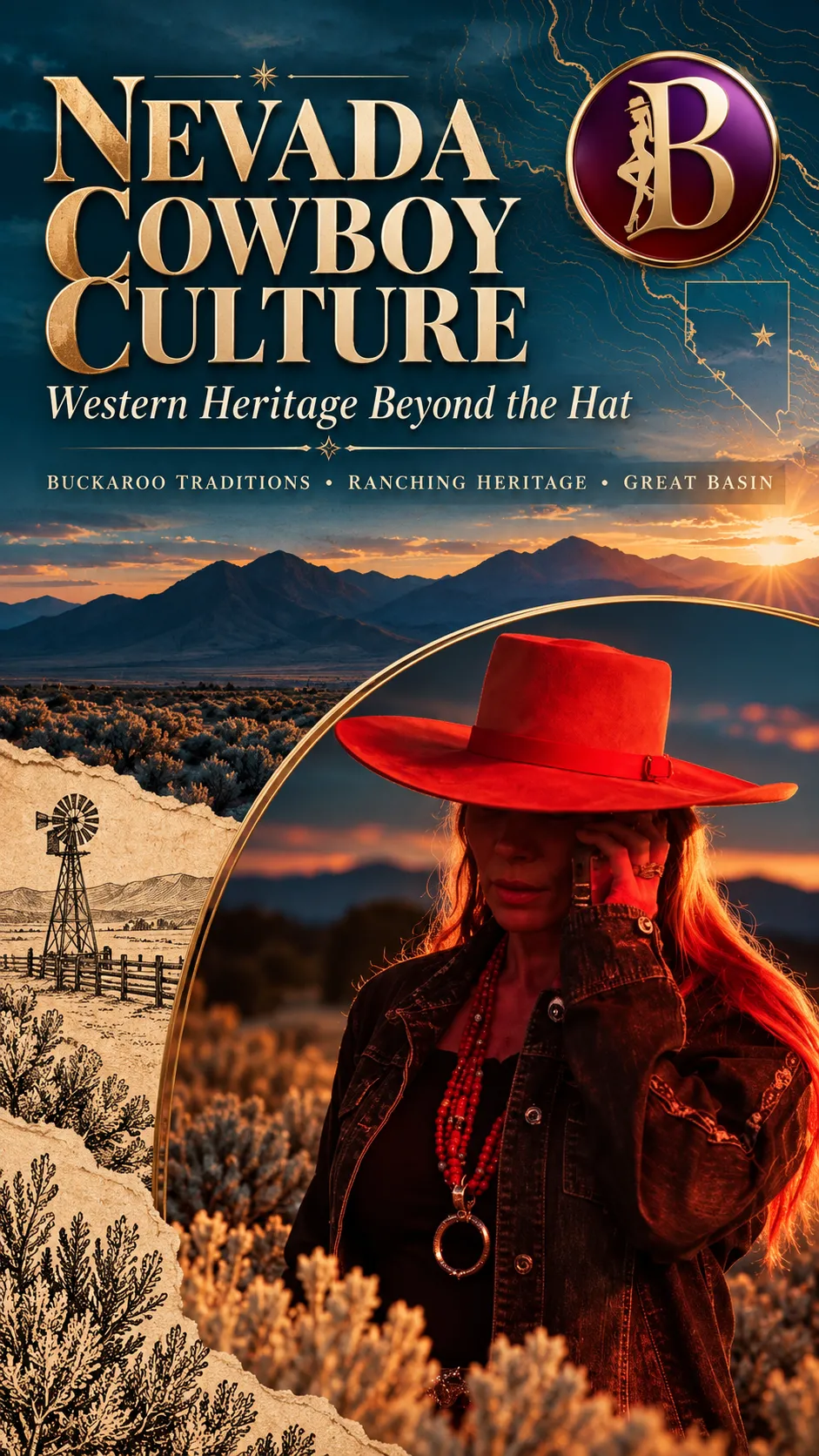
Nevada Cowboy Culture: Western Heritage Beyond the Movies
Nevada Cowboy Culture: The Western Heritage Beyond the Hat
A red cowboy hat can make a statement, but Nevada's Western identity has always been about more than what someone wears.
Across the state, the spirit of the American West lives in ranching communities, open landscapes, historic trails, skilled leatherwork, rodeo traditions, and generations of people connected to the land. Understanding Nevada cowboy culture means looking beyond the familiar image of a cowboy and discovering the traditions that have shaped the state's identity.
In northeastern Nevada, that heritage is especially visible. Wells sits along the Cowboy Corridor, a travel route recognized by Travel Nevada for its historic communities, Western traditions, cultural attractions, and landscapes stretching along Interstate 80.
For Bella's Hacienda Ranch in Wells, this regional setting provides a meaningful connection to the character of Nevada. The Western aesthetic is recognizable, but the history behind it is even more interesting.
What Makes Nevada's Cowboy Culture Different?
Nevada's Western culture developed through a combination of geography, ranching, travel, commerce, and cultural traditions.
The Great Basin's wide valleys, mountain ranges, and arid environment helped shape distinctive ways of working with livestock and moving across large distances. Ranching remains part of northern Nevada's identity, while historic towns preserve elements of the region's working and travel traditions.
One term associated with this heritage is buckaroo. Nevada's cowboy traditions have distinctive regional characteristics, including influences from Basque and Indigenous cultures. Travel Nevada describes the Cowboy Corridor as a route where buckaroo, Basque, and American Indian traditions intersect with historic communities and contemporary attractions.
This history makes Nevada's cowboy identity more complex than the familiar images found in Western films.
It is a living regional culture shaped by work, community, landscape, and traditions passed between generations.
The Cowboy Corridor: Discovering Nevada Beyond the Highway
The Cowboy Corridor follows approximately 400 miles of Interstate 80 across Nevada, connecting communities between the Reno area and West Wendover. Travel Nevada recommends allowing two to four days to explore the route rather than treating it as a drive to complete as quickly as possible.
Along the way, travelers can encounter historic sites, museums, Western shops, cultural events, local restaurants, and outdoor destinations.
Elko, for example, is known for its Western heritage, public art, museums, and connections to cowboy poetry and leatherwork. The wider route also includes communities such as Winnemucca, Battle Mountain, Wells, and West Wendover.
The appeal is not limited to sightseeing.
These towns offer a glimpse of how Western traditions remain part of everyday regional identity. Historic buildings and cultural institutions preserve earlier stories, while local events and contemporary businesses continue to give the region its own character.
For travelers, the lesson is simple: leave time to explore the places between major destinations.
Wells, Nevada: Where Western History Meets Open Country
Wells offers a particularly interesting perspective on northeastern Nevada.
Located in Elko County at the junction of Interstate 80 and U.S. Highway 93, the community has a history connected to Indigenous life, migration across the California Trail, and the expansion of the Transcontinental Railroad. The Western Shoshone have lived in and around what is now Wells for thousands of years, according to Travel Nevada.
In 1869, the Central Pacific Railroad established a stop at Wells, helping connect the community to regional transportation and commerce. Although an earthquake severely damaged its historic downtown corridor in 2008, parts of the town's historic character remain visible.
This broader history matters because the American West was never shaped by one group alone.
Indigenous communities, railroad workers, miners, ranchers, merchants, and travelers all contributed to the region's development. Respecting that complexity makes the story of Nevada more meaningful than relying on a single romanticized version of frontier history.
Western Style: Why the Cowboy Look Endures
The cowboy hat remains one of the most recognizable symbols of Western culture. Yet traditional Western style developed around practical clothing and equipment suited to working outdoors.
Hats, boots, durable outerwear, leather goods, and distinctive accessories continue to influence contemporary fashion. Today, those elements may appear in working ranch environments, country music, rodeos, fashion photography, and modern Western-inspired branding.
The most memorable Western looks often combine classic details with individual personality.
A striking hat, for example, can become a focal point. A dark jacket can provide contrast. Jewelry or a distinctive accessory can make the overall look feel personal rather than like a costume.
That flexibility helps explain why Western aesthetics continue to appeal to people far beyond traditional ranching communities.
The style carries recognizable associations with independence, individuality, and the vast landscapes of the American West, while allowing room for contemporary interpretations.
Beyond the Hat: The People and Traditions Behind the Image
It is easy to reduce cowboy culture to a visual style. But its deeper significance lies in the people, skills, and traditions associated with the region.
Working ranches, livestock knowledge, horsemanship, leather craftsmanship, music, poetry, and local gatherings are all part of the wider Western cultural landscape. Travel Nevada highlights museums, Western heritage centers, traditional events, and regional food as ways to experience the Cowboy Corridor's distinctive character.
These traditions also continue to change.
Modern ranching communities live in the present, balancing longstanding practices with contemporary technology, business realities, and changing lifestyles. Their culture is not simply a preserved scene from the nineteenth century.
That is worth remembering whenever Western style is used in photography, hospitality, or branding. The aesthetic may be dramatic, but the real heritage behind it is grounded in history and lived experience.
Bella's Hacienda Ranch and the Spirit of Nevada
Bella's Hacienda Ranch is located in Wells, within the northeastern Nevada landscape that forms part of the Cowboy Corridor region.
That location provides a natural connection to Nevada's Western character. The mountains, wide-open spaces, historic communities, and distinctive regional traditions all contribute to a sense of place that differs from the atmosphere of the state's larger cities.
For Bella's, Western-inspired style can express individuality and confidence without needing to imitate a Hollywood version of the Old West.
A bold red hat, classic dark clothing, or a carefully chosen accessory can evoke the spirit of the region while remaining distinctly personal.
The strongest brand identity does not simply borrow a familiar look. It gives that look meaning through the person wearing it, the place behind it, and the story being told.
How to Explore Nevada's Western Heritage
Visitors interested in Nevada cowboy culture can begin with destinations featured along the Cowboy Corridor.
Consider exploring:
Wells and its historic surroundings, including the local history highlighted by Travel Nevada.
Elko's Western cultural attractions, with museums, public art, and connections to cowboy poetry and leatherwork.
The wider Cowboy Corridor, which connects communities, cultural institutions, and outdoor destinations across northern Nevada.
The surrounding mountain country, including the Angel Lake area near Wells, where seasonal road access and outdoor activities depend on current conditions.
Before traveling, confirm opening hours, event dates, and seasonal conditions with the relevant destination. Rural travel can require more preparation than a city visit, particularly when outdoor activities are part of the itinerary.
The reward is a more complete understanding of Nevada, one built around its communities and history rather than its most familiar stereotypes.
Final Thoughts
Nevada cowboy culture is more than a hat, a fashion statement, or a familiar image from a Western movie. It reflects the state's ranching heritage, regional craftsmanship, cultural influences, historic communities, and enduring connection to the land.
In Wells, that identity exists alongside the area's Indigenous history, railroad heritage, mountain landscapes, and modern community life.
For Bella's Hacienda Ranch, the Western aesthetic offers a way to celebrate the personality of northeastern Nevada while interpreting its distinctive style in a contemporary way.
Explore Bella's Hacienda Ranch and discover more about the Wells community and the Western heritage that makes this part of Nevada distinctive.
