Nevada Brothel Themed Rooms: Why Atmosphere Matters
Nevada Brothel Themed Rooms: How Design Creates a Distinctive Atmosphere
A room can tell you a great deal before anyone says a word.
Lighting establishes a mood. Furniture creates comfort. Mirrors change the way a space feels. Color gives a room personality. Small decorative details can transform an ordinary interior into somewhere that feels deliberately different.
That is one reason Nevada brothel themed rooms have become an interesting part of the broader conversation around the state's unique adult hospitality culture.
Rather than treating every private room as interchangeable, themed interiors can give different spaces their own visual identity. Some may feel classic and traditional. Others may use dramatic lighting, distinctive furnishings, or a more contemporary aesthetic.
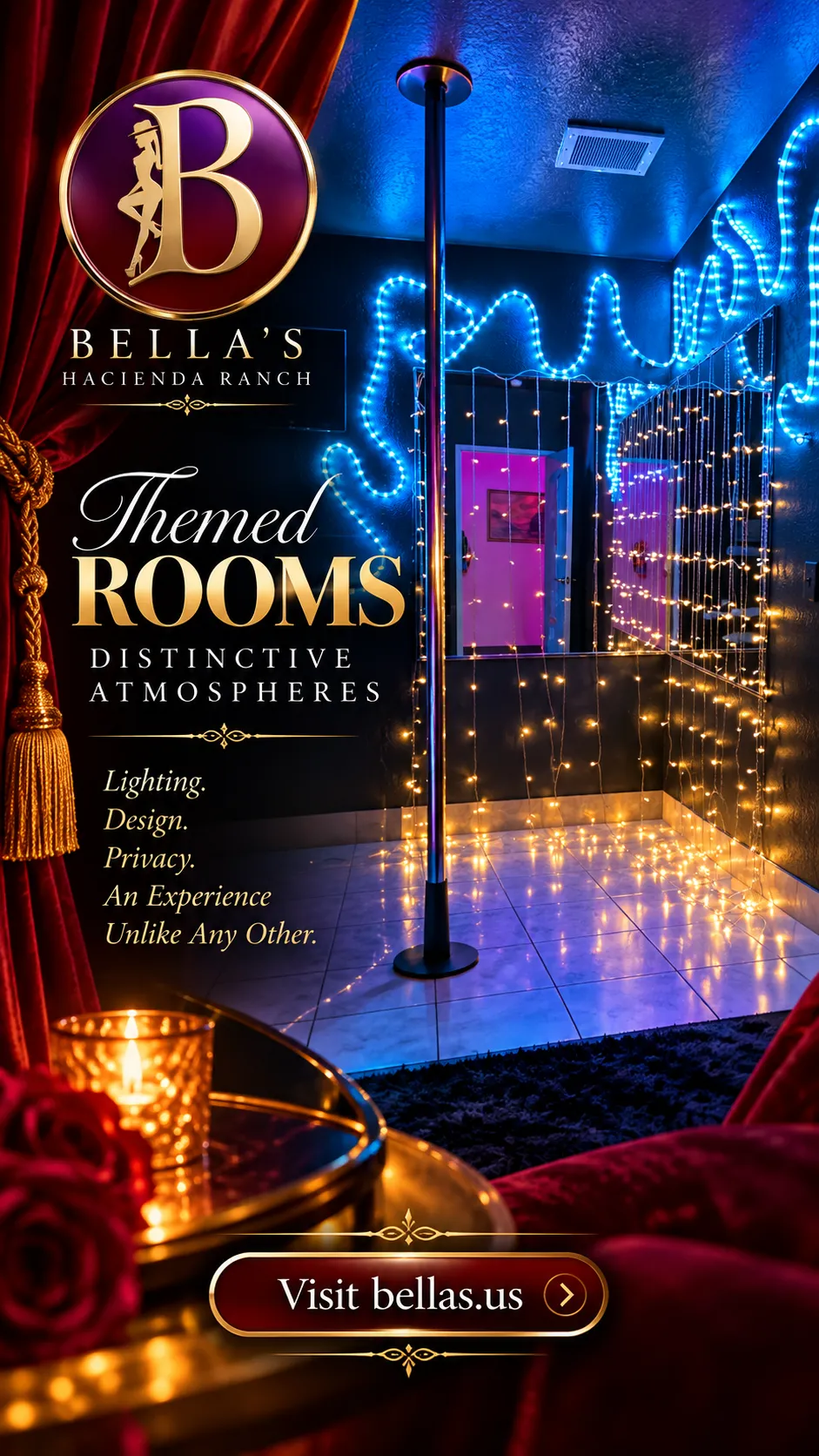
The room pictured here takes that approach through saturated blue lighting, warm string lights, mirrors, and a dedicated dance feature.
It demonstrates an important design principle: atmosphere does not come from one object. It comes from how several elements work together.
What Makes a Room Feel "Themed"?
A themed room is essentially a space with a deliberate visual concept.
That concept does not have to be elaborate.
Sometimes it is created through one dominant color palette. Sometimes through furniture, artwork, lighting, or a particular design era. In other cases, a distinctive room feature becomes the focal point around which the rest of the space is designed.
The objective is to create a room that feels different from a generic bedroom.
A well-designed theme gives visitors something to notice and remember.
It can also help an establishment express its personality.
Instead of every room looking exactly alike, individual spaces can offer different visual experiences while still belonging to the same property.
Lighting Is Often the Starting Point
The strongest feature in the photographed room is arguably the lighting.
Blue LED lighting covers the room's walls and ceiling, while warm white string lights create a contrasting glow around the mirrors and floor.
That combination is effective because the two lighting temperatures create visual contrast.
The blue illumination provides the dramatic base.
The warmer lights soften the space.
Neither has to dominate completely.
This is a useful interior design lesson for any hospitality environment. Different light sources can be layered to create depth instead of relying on one ceiling fixture.
The result can feel more immersive and visually interesting without requiring major structural changes.
Mirrors Can Make a Small Space Feel Larger
Mirrors are another important element in themed interior design.
Beyond their practical function, they reflect both light and surrounding surfaces. In a compact room, that can help create the impression of additional depth.
In the pictured room, the large mirror surfaces multiply the blue lighting and strings of warm lights, making them part of the room's visual composition.
This is a simple example of using an existing architectural feature to amplify a design concept.
Mirrors can also help connect separate parts of a room visually, making the overall layout feel more cohesive.
The important consideration is placement. A mirror should contribute to the atmosphere rather than simply fill an empty wall.
A Signature Feature Gives the Room an Identity
The dance pole in the center of the pictured room functions as a clear focal feature.
From a design perspective, that matters because distinctive rooms usually benefit from one element that immediately tells you what makes the space different.
That could be a dramatic light fixture, an unusual bed frame, a vintage piece of furniture, artwork, a fireplace, or another specialty feature.
Without a focal point, a themed room can easily become a collection of unrelated decorations.
With one, the surrounding elements can support the concept.
The room becomes easier to recognize and easier to remember.
Color Can Completely Change the Character of a Space
Color is particularly powerful in private interiors because it influences the mood before a visitor has consciously processed the details.
Blue can create a cooler, more atmospheric appearance.
Red can feel richer and more dramatic.
Warm neutral colors can create a softer and more traditional environment.
Black can increase contrast and make illuminated details stand out.
The photographed room demonstrates how a deep blue palette can completely transform otherwise ordinary architectural surfaces.
The walls, mirror frames, ceiling, and floor take on a different character simply because of the light.
This is why color should be considered together with lighting rather than separately.
Why Different Rooms Can Appeal to Different Personalities
One of the advantages of offering distinctive room designs is variety.
A visitor who prefers traditional decor may feel more comfortable in a classic room.
Someone who enjoys dramatic lighting may prefer something more theatrical.
Another person may simply want a warm, understated space.
There is no single definition of luxury that works for everyone.
Personal preference matters.
This is consistent with Bella's current approach to hospitality, which emphasizes comfort, choice, privacy, and allowing visitors to decide how much time they want to spend and what kind of experience they are seeking. The ranch's website also describes its private experiences as being designed around individual preferences.
That makes the physical environment part of a larger idea: giving people room to find what feels right for them.
Themed Rooms Are Not About Decoration Alone
It is easy to look at a dramatic room and focus exclusively on aesthetics.
But hospitality design has another purpose: helping people feel comfortable.
Lighting should be pleasant rather than overwhelming.
Furniture should be usable rather than purely decorative.
The layout should allow people to move naturally.
The overall environment should feel intentional rather than cluttered.
A room can be visually striking and still feel uncomfortable if the practical elements have been ignored.
The best themed spaces balance personality with usability.
How Bella's Hacienda Ranch Fits Into the Picture
Bella's Hacienda Ranch is located in Wells, Nevada, and its current website emphasizes a private, comfortable, discreet environment where visitors can communicate openly and choose the experience that fits them. It also states that inquiries can be made privately and that the establishment is open 24 hours a day, seven days a week.
That makes the atmosphere of the property relevant to the overall visitor experience.
The photographed room offers a very different visual language from a conventional hotel bedroom.
Its lighting, mirrors, string lights, and central dance feature create a distinctive setting that feels deliberately separate from everyday surroundings.
For a property with a strong personality, that visual variety can become part of the identity.
What First-Time Visitors Should Know About Themed Rooms
A common mistake is assuming that every Nevada establishment will have the same type of room or the same design features.
They will not.
Individual properties differ in architecture, decor, room layouts, and house policies.
That means visitors should avoid assuming that a particular feature shown online is available at every establishment or in every room.
When a specific room feature matters to you, the best approach is to ask the establishment directly about its current rooms and policies.
It is also worth remembering that photographs can emphasize lighting and composition. A room may feel different in person depending on the time of day, the lighting configuration, and how the space is being used.
Why Atmosphere Can Become Part of the Memory
People often remember places through sensory details.
A particular color.
A distinctive lamp.
A patterned wall.
A certain style of music.
A room filled with unexpected lights.
These details can become associated with the experience itself.
That is the value of a themed room when it is done well.
It does not need to be extravagant.
It simply needs to be distinctive enough that it feels like somewhere you have not been before.
That principle extends far beyond Nevada's adult hospitality industry. Restaurants, hotels, lounges, theaters, and resorts all use interior design to create a sense of identity.
A memorable environment is part of good hospitality.
Design Should Invite Curiosity, Not Overwhelm
There is a fine line between theatrical and excessive.
Too many colors, decorative objects, lights, and competing features can make a room feel chaotic.
The photographed room works because there is a clear visual hierarchy.
The blue lighting establishes the foundation.
The warm lights provide contrast.
The mirrors multiply the illumination.
The central feature provides a focal point.
Everything else becomes supporting detail.
That hierarchy is what keeps a dramatic room from becoming visually exhausting.
Final Thoughts
Nevada brothel themed rooms are an interesting example of how interior design can shape an experience.
Lighting, mirrors, color, textiles, furniture, and signature features can transform a private room from a generic space into somewhere with its own identity.
The key is not simply adding more decoration.
It is choosing details that work together.
The photographed room shows how dramatic blue lighting, warm accent lights, mirrors, and one unmistakable focal feature can create an environment that feels deliberately different.
For visitors researching Bella's Hacienda Ranch in Wells, Nevada, the surroundings and the interior setting are part of understanding the broader character of the property. Bella's emphasizes a private and personalized approach to hospitality, while the individual spaces provide their own visual character.
