How to Create a Luxury Room Atmosphere Through Design
How to Create a Luxury Room Atmosphere Through Lighting and Design
A room does not have to be enormous to feel luxurious.
Often, it is the smaller details that change the character of a space: the glow of a lamp, the weight of a curtain, the texture of upholstery, an antique-looking mirror, or the way furniture is positioned to create a sense of privacy.
The result is what designers often describe as atmosphere.
A luxury room atmosphere is created through a combination of lighting, color, texture, proportion, furniture, and visual details. The objective is not simply to make a room look expensive. It is to make the space feel intentional, comfortable, and distinctive.
That is especially important in a private hospitality environment, where the surroundings contribute to the feeling of stepping away from ordinary routines.
Why Lighting Changes the Entire Room
Lighting is one of the most powerful elements in interior design because it changes how every other feature is perceived.
Compare bright overhead lighting with the softer glow of a table lamp. The furniture has not moved, but the emotional character of the room can feel completely different.
Warm lighting tends to create a softer, more traditional atmosphere. It can make wood tones appear richer, fabrics look deeper, and decorative details feel more pronounced.
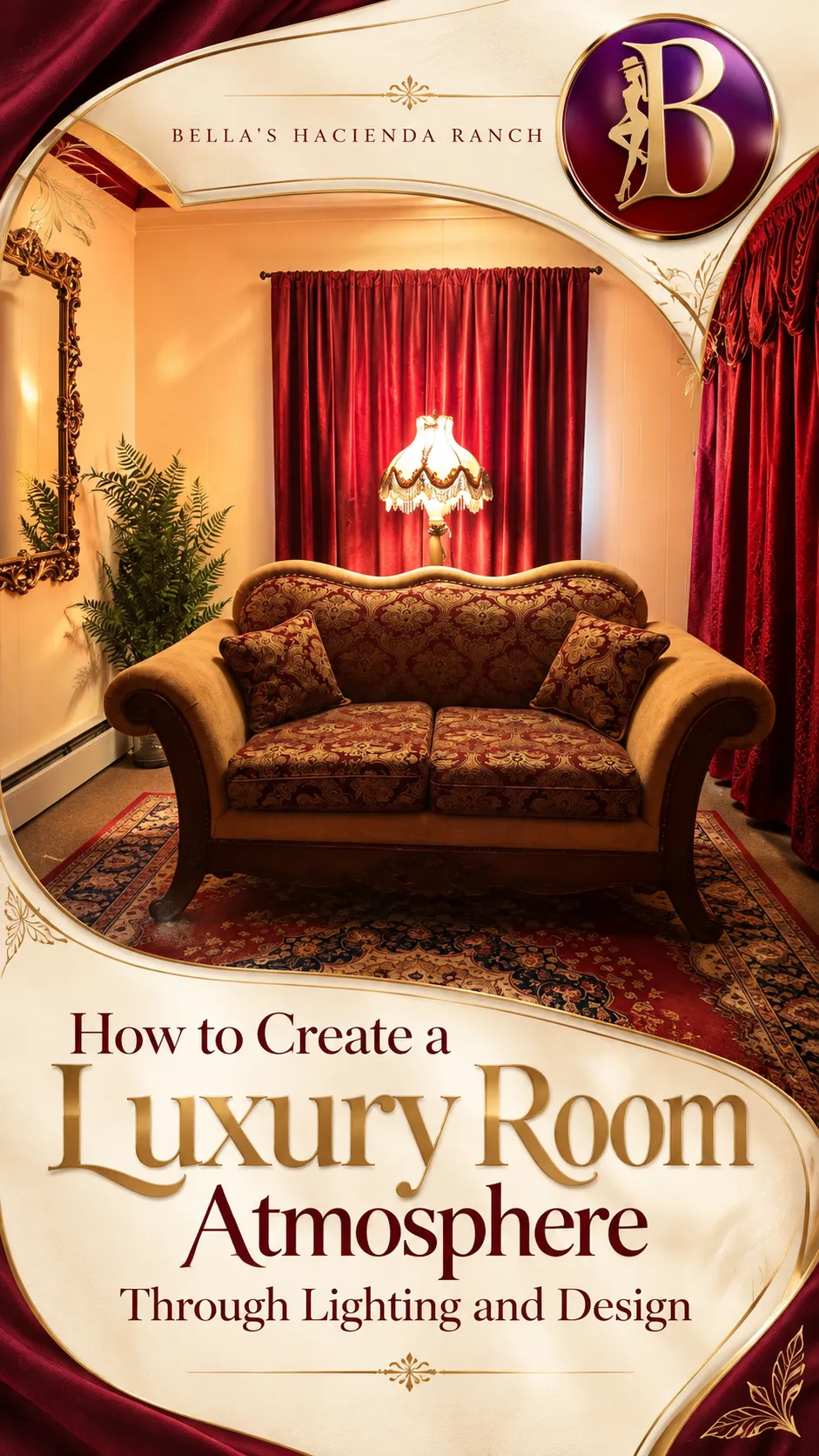
In the featured room, the central lamp becomes almost part of the decor itself. Rather than simply illuminating the space, it contributes to the visual identity of the room.
For a luxury atmosphere, layered lighting can be particularly effective. Instead of relying on one strong light source, a room can combine ambient lighting with lamps and other carefully positioned sources.
The result is more dimensional and less clinical.
Rich Fabrics Create Visual Warmth
Fabric has another major influence on how luxurious a room feels.
Velvet, brocade, patterned upholstery, heavy curtains, and layered textiles can all introduce a sense of richness without requiring expensive architectural changes.
Deep red curtains are particularly effective when a room is intended to feel traditional or dramatic. They add visual weight while also helping frame windows and define the room's boundaries.
A patterned sofa creates a similar effect.
Instead of looking like a generic piece of furniture, it becomes part of the room's personality.
This is why texture matters just as much as color. A room filled with flat, identical surfaces can feel visually cold, while a combination of fabric, wood, metal, glass, and decorative textiles gives the eye more to discover.
Vintage Decor Gives a Room a Sense of Character
Modern luxury is often associated with clean lines and minimalism, but luxury does not have to mean contemporary.
Vintage-inspired interiors can create an entirely different kind of sophistication.
An ornate mirror, traditional lamp, decorative upholstery, and rich curtains can make a room feel established and distinctive rather than newly assembled.
The large decorative mirror in this setting is a good example. Its elaborate frame functions as artwork as much as a practical object.
That is one of the advantages of vintage design: everyday furnishings can also become visual focal points.
For an establishment with a strong personality, those details can help create a setting that guests remember as a place rather than simply another room.
Privacy Is Also a Design Element
Privacy is not only about doors and walls.
Interior design can contribute to a feeling of separation by controlling sight lines, using curtains, arranging furniture thoughtfully, and creating smaller zones within a larger room.
Heavy curtains, for example, can do more than block light. They can visually close off part of a room and make the surrounding environment feel more enclosed.
Furniture placement matters too.
A sofa positioned away from a doorway can create a more comfortable conversational area. Lamps can help define seating zones. Mirrors can expand the visual field while also contributing to the room's decorative character.
Good design quietly answers a question visitors may never consciously ask:
Does this space feel comfortable enough to settle into?
Why Seating Matters in a Private Hospitality Space
A room designed only around appearance can still feel uncomfortable.
Seating is one of the elements that determines whether people actually want to spend time in a space.
A substantial sofa, like the one featured here, creates an immediate sense of softness and availability. It also establishes a natural focal point.
When seating is comfortable and positioned thoughtfully, conversation becomes easier and the room feels more welcoming.
That matters in any hospitality setting where personal interaction and conversation are part of the experience.
Luxury is not only something a person sees.
It is also something they experience physically through comfort, temperature, lighting, acoustics, and the way the room allows them to move.
Color Can Shape the Mood Without Saying a Word
Color is another subtle tool for creating atmosphere.
Deep reds and burgundy tones can make a room feel traditional, dramatic, and warm. Neutral walls can keep those stronger colors from becoming overwhelming.
The key is balance.
One strong color can become a signature element, while surrounding it with softer neutrals allows the room to remain sophisticated rather than visually crowded.
Gold and brass accents can add another layer of warmth, particularly when paired with darker woods and traditional fabrics.
At Bella's Hacienda Ranch, that kind of rich, classic visual language fits naturally with a setting designed around privacy, individuality, and a more personal form of hospitality.
The Importance of Restraint
Creating a luxurious room does not mean filling every corner.
In fact, too many decorative objects can weaken the effect.
Luxury often depends on knowing when to stop.
A statement mirror can be enough without three additional pieces of wall art. One distinctive lamp can have more impact than a collection of competing fixtures. A patterned sofa can become the focal point while the surrounding furnishings remain comparatively restrained.
The objective is to create visual hierarchy.
When everything demands attention, nothing feels special.
When a few carefully selected details carry the design, the room becomes easier to appreciate.
How This Design Philosophy Fits Bella's Hacienda Ranch
Bella's Hacienda Ranch in Wells, Nevada, has an identity that is distinctly different from a standardized hotel or modern corporate venue.
A setting with personality gives visitors something more memorable than a generic room.
Traditional furnishings, rich textiles, warm lighting, and carefully selected decorative pieces can reinforce a sense of history and character while still creating a comfortable private environment.
That balance is important.
The room should feel special without feeling artificial. Refined without becoming sterile. Decorative without becoming overwhelming.
The featured setting demonstrates how relatively simple elements can work together to create a recognizable atmosphere.
Creating Luxury Without a Huge Budget
A luxury room atmosphere does not necessarily require a complete renovation.
Several smaller changes can have a noticeable effect:
Change the lighting.
Replace harsh overhead illumination with warm lamps and layered sources.
Upgrade textiles.
Curtains, upholstery, pillows, and rugs can dramatically alter the visual character of a room.
Choose one statement piece.
An ornate mirror, distinctive lamp, antique table, or artwork can give the room a focal point.
Pay attention to color.
A controlled palette creates cohesion and makes decorative details feel intentional.
Improve furniture placement.
A better layout can make an existing room feel more private and comfortable without changing the furniture itself.
The strongest transformation often comes from coordination rather than expense.
Final Thoughts
A luxury room atmosphere is created through details that work together.
Warm lighting creates depth. Rich fabrics introduce texture. Vintage furnishings add character. Curtains can enhance privacy. Comfortable seating encourages people to settle in. A thoughtful color palette gives the entire room cohesion.
The most successful interiors do not need to announce that they are luxurious.
They simply feel considered.
That is what makes a distinctive private room memorable, and it is one reason interior design plays such an important role in hospitality at places like Bella's Hacienda Ranch.
